Addressing the Attendance and Benefit Gap
A New Research And Implementation Paradigm For Museums, Galleries And Heritage

This four-year (2026-2030) research project is funded by the AHRC and led by the Research Centre for Museums & Galleries (RCMG) at the University of Leicester, in partnership with Birmingham Museums Trust. Museum visiting directly reflects the broad socioeconomic inequalities prevalent in society. Forging a new research and implementation paradigm, this project will, for the first time, enable Museums and Heritage Institutions (MHIs) to deepen their contribution to society by understanding how they can close the gap in who visits – and hence who benefits from – museums, galleries and heritage.
Our project envisages the sector utilising its research resources and creative expertise to develop evidence-based innovations, research-led and contextually appropriate implementation strategies, and methodologically rigorous evaluations, to build on a growing and organised sector-wide evidence-base of ‘what works’ to drive representative participation. We are going to work together to build this approach, test it and share it.
The project
Museums are publicly supported institutions, either through direct taxpayer funding or through charitable status, which confers numerous tax and other financial benefits as well as social credibility. The public nature of museums also means that they have a legal and ethical obligations to work in ways that challenge discrimination, advance equality of opportunity, foster good relations between people and reduce the inequalities of outcome which result from socio-economic disadvantage. The legal and ethical implication of museums’ public status is not that everyone should visit museums, but that museum audiences should be broadly representative of society. Where museum audiences are not representative, museums have an obligation to explain why these inequalities exist and what they are doing to address them.
Nationally and internationally, audiences are far from representative of the wider society. Museum visiting reflects the socio-economic gradient, closely tracking inequalities in education, income, employment, mental health and other indicators of social wellbeing. A vast array of sociological research shows that people who participate in and benefit from museums hold more formal qualifications and are financially better off than those who do not participate. Or, put another way, the more economic and educational disadvantage an individual experiences, the less likely they are to participate in and benefit from museums, galleries and heritage. This clustering with other forms of disadvantage shows that museum visiting is not entirely a matter of personal preference, but reflects wider inequalities. Population-level studies in the epidemiology of culture tell us that simply visiting a museum may have positive health benefits. This makes the unfairness of the status quo in museum visiting even more significant, as it means that museums are adding to health inequalities.
Decades of concerted efforts by museums of all genres and scales, supported by national and local government policy and targeted investment, including more than £5 billion of Lottery Funding, have not reduced this gap. While pockets of positive transformation which successfully challenge the conventional norms and processes of museums that benefit already advantaged groups and limit change have been achieved, museums have struggled to find ways to understand, consolidate, share and sustain progress.
Forging a new research and implementation paradigm, this project will, for the first time, enable Museums and Heritage Institutions (MHIs) to understand how they can close the gap in who visits – and hence who benefits from – museums, and deepen their contribution to Society. Our project envisages the sector utilising its research resources and creative expertise to develop evidence-based innovations, research-led and contextually appropriate implementation strategies, and methodologically rigorous evaluations, to build on a growing and organised sector-wide evidence-base of ‘what works’ to drive representative participation. We are going to work together to build this approach, test it and share it.
Search
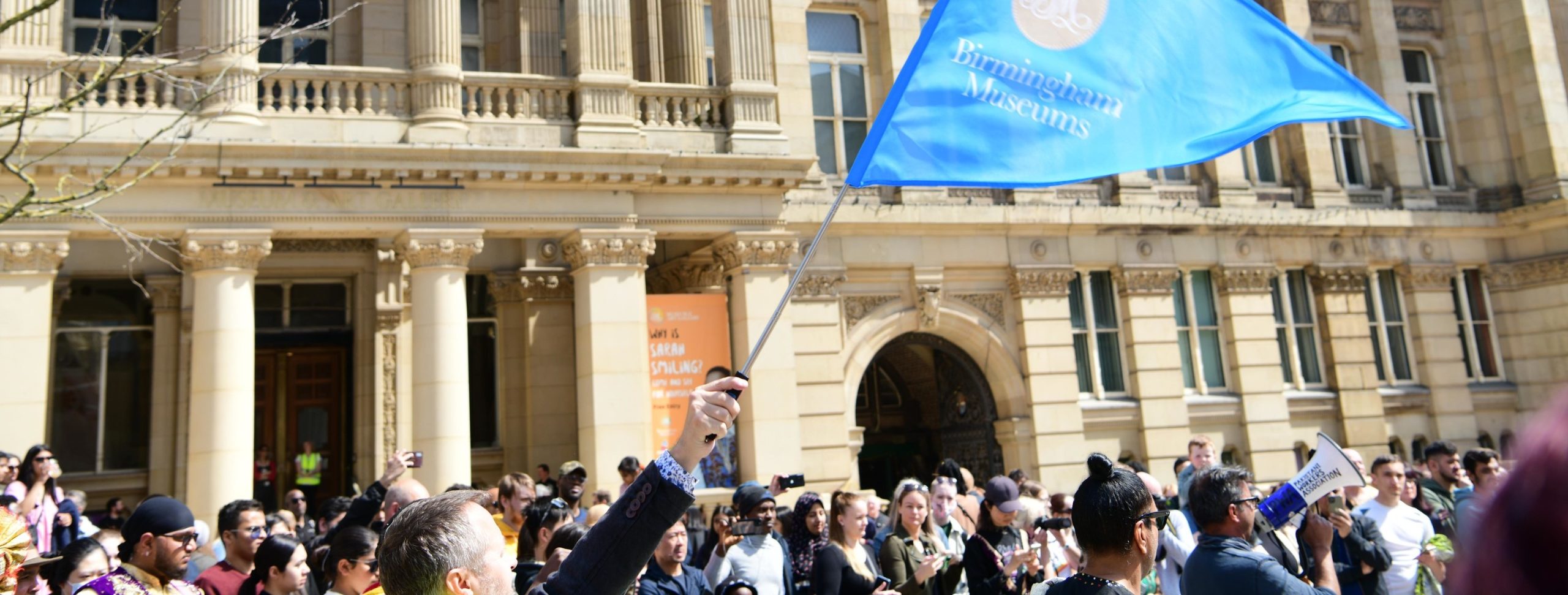
Images courtesy of Birmingham Museums Trust